
The section of our website regarding service of Bucklins, specifically in the Revolutionary War, is hopefully going to be expanded when we receive a contribution of a few hundred dollars. We have much information, but no funds or volunteers to finish the research and put it into electronic form to then have our webmaster format it and put it into the website.
By 1775 the Rehoboth Militia was a force of 210 persons. The force was divided into at least three or four companies, apparently each in a different part of the township of Rehoboth. Originally chartered in 1774 by the town of Rehoboth as a town Militia unit, the Rehoboth Militia was comprised of both ordinary Militia and Minutemen. The Minutemen were men of the Militia who volunteered to be ready to march “in a minute” after being summoned.
The Gaspee shooter Joseph Bucklin 5th’s uncle, John Bucklin, was a captain of the Rehoboth Minute Company in 1774
There was a Joseph Bucklin who marched as a Sergeant, with the Minute Man Company of Rehoboth on the Alarm raised for minute men to go to Lexington and Concord to fight in the battle there in April, 1775. Two Bucklins went as privates. The company was commanded by Capt Bishop. [Erhardt, p. 724].
Other than Captain John Bucklin’s Minute Men company, a different company of the Rhoboth town Militia in 1775 was under command of Capt. John Perry and had as officers Lieut. John Paine, Ensign James Buklin [sic, should be Bucklin] and Sergeant Robert Sutton (probably the Gaspee Raider).
There is a problem identifying the right James Bucklin who was the company Ensign, third in command. One possibility is the James Bucklin 3rd who was the son of James Bucklin 2nd and Mary Peck of Pawtucket, Born 30 Nov 1743. James Bucklin 3rd would have been 32 at the time of the Revolution. This age fits for being an Ensign with Sergeant Sutton (age 29) in the same company. There were several men named “James Bucklin” in Rehoboth, and the Ensign was probably not the one listed in Massachusetts Soldiers and Sailors of the Revolutionary War, v. 2 p. 755, as being fined £10 for non-service when drafted to serve in the Continental Army on 15 May 1777.
Other than Capt John Bucklin’s Minute Men company, and the Capt Perry militia company that had James Bucklin as Ensign, there was a third company commanded by Captain Bishop. Capt. Bishop’s company had a Sergeant Joseph Bucklin. John G. Erhardt, History of Rehoboth, Seekonk, Mass., Pawtucket & East Providence, RI, 1692-1812, (PO Box 33, 500 Fall River Av., Seekonk, MA, 1990), 724, says there was a Joseph Bucklin who marched as a Sergeant, with the Minute Man Company of Rehoboth on the Alarm, with two Bucklins as privates in the company of Capt Bishop. (Query whether this Joseph Bucklin was Joseph Bucklin 5th, the Gaspee shooter? Erhardt’s notes don’t help with the identity.
As stated above, by 1775 the Rehoboth Militia was a force of 210 persons. At that time the entire Militia force was under the command of Capt. John Daggett of Attleboro and Col. Timothy Walker of Rehoboth. On April 9, 1975, ten days before the confrontation between the British and American forces at Concord and Lexington, the entire Rehoboth Militia unit was sent to Freetown MA. Without a shot being fired, the English surrendered, and the Rehoboth militia seized, their 40 stands of British arms, munitions, and accoutrements. Ten days later the British forces countered by marching out of Boston to seize the arms and munitions of the nearer militias at Concord and Lexington.
A Muster Roll of Capt. John Perry’s Company of Minute Men from Rehoboth, from the 19th of April to the 27th , 1775 shows Bucklins. Each man gave 8 day’s service. This is taken from Arnold, Vital Records of Rehoboth (1897).
Capt. John Perry, Lieut. John Paine, Ensign James Bucklin, Sergeant John Wilson, Sergeant John Smith, Miles Shorey, Aaron Lyon, Preserved Abell, Caleb Walker, James Hill, William Bridgham, Richard Fairbrother, Jonathan Read, Samuel Jones, Enos Walker, Amos Goffa, Comfort Hill, William Ingraham, Lemuel Perren, Demos Biship, James Campbell, Peter Whitaker, Ezra Read, John Williams (drummer), Isaac Fuller, Joseph Wheaton, Jonathan Barney, Simeon Bowen, John Ingraham, Elkanah French, Barzaleel Bowen, James Medbury, Robert Abell, Eleazer Bowen, Amos Read, William Carpenter,
Capt. Perry had the following in a company in Col. Timothy Walker’s Regiment. These enlisted for 8 months from the 1st of August, 1775. Again there were Bucklins.
Capt. John Perry, Lieut. John Paine, Ensign James Bucklin, Sergeant Robert Sutton, Sergeant John Wilson, Sergeant John Smith, Sergeant Miles Shorey, Corporal Amos Goff, Corporal Lemuel Perren, Corporal James Hill, Corpiral David Lawrence, Drummer John Williams, Fifer james Bly, Preserved Abell, James Alger, George Allen, Squire Allen, William Bridgham, Demos Bishop, Isaac Bowers, Charles Bowers, Asa Bowers, Gideon Brown, Sylvester Bowers, Jonathan Bucklin, Josiah Blake, Barzilla Bowen, Barzaleel Bowen, James Campbell, Samuel Chaffee, William Daggett, Richard Fairbrother, Isaac Fuller, William Fuller, Jonathan French, Sylvester Fuller, Stephen Hill, Comfort Hill, William Ingraham, Samuel Jones, Aaron Lyon, John Medbury, John McMullen, Amos Richardson, Ezra Read, Enos Walker, Peter Whitaker, Joseph Wheaton, John Walker, Peter Walker, Caleb Walker, Ephria Whitaker, Thomas Cole
There was a second company of Minute Men from Rehoboth, commanded by Capt. Bliss, for eight months from April or May of 1775. [Arnold, Vital Records of Rehoboth (1897).]
Capt. Samuel Bliss, Lieut. Aaron Walker, Ensign Joseph Allen, Serjeant Aaron Read, Serjeant James Bullock, Serjeant Noah Allen, Serjeant Chrisstopher Ormsbee, Nathan Wheeler, Jonathan Nask, Elijah Perry, Peter Read, Hohn Bown, Samuel Munroe, William Fairbrother, Benjamin Coomer, William Allen, Oliver Jones, Samuel Allen, Joseph Ingals, Thomas Campbell, Hohn Dryer, Nathan Turner, Nathaniel Turner, Ephraim Bliss, Levi Lewis, Valentine Wheeler, Jonathan Macomber, Able Hix, Preserved Bullock, Laben Lake, Jonathan Drowne, Ezekiel Hix, Joseph Allen, Jacob Fuller, Comfort Stanley, Oliver Peck, Amos Bliss, Philip Peck Solomen Peck, Elnathan Lake, Josiah Perry, Ichabo
Samuel Blisss, was afterwards General Washington’s steward at Morristown, in the winter of 1777.
Thereafter, Capt Bliss commanded a company that had the following enlistees, for 8 months from April and May, 1775.
Capt. Samuel Bliss, Lieut. Aaron Wheeler, Ensign Joseph Allen, Sergeant Aaron Read, Sergeant James Bullock, Sergeant Noah Allen, Sergeant Christopher Ormsbee, Corporal Nathaniel Bliss, Corporal Nathaniel Wheeler, Corporal Jonathan Macomber, Corporal Elijah Wheeler, Drummer James Wheeler, Fifer Cyriel Smith, Joseph Allen, Samuel Allen, Wiliam Allen, Ephraim Bless, Charles Bless, David Bliss, Levi Baldwin, Thomas Baldwin, Preserved Bullock, Isaaac Burr, Samuel Baker, Eliphalet Corbin, James Cole, Thomas Campbell, John Dryer, William Fairbrother, Simon Goff, Abel Hix, Joseph Ingals, ______ Ide, Oliver Jones, Labin Lake, Levi Lewis, Samuel Munroe, Jonathan Nash, David Perry, Sylvester Peck, Peter Read, Nathaniel Round, Richard Round, Comfort Robinson, David Turner, Nathan Turner, Valentine Wilmot, Jonathan Drown, Christopher Blanding.
The following is a list of some officers in Col. Timothy Walker’s regiment.
Col. Walker was a resident of Rehoboth as were also at least part of his officers .
STAFF OFFICERS: Timothy Walker, Esq., Col.; Nathaniel Leonard, Lieut, Col.; Abiel Mitchell, Major
CAPTAINS: John Perry, Peter Pitts, Mason Shaw, Silas Cobb, John King, Daniel Parker, Samuel Bliss, Caleb Richardson, Jacob Fuller, Francis Liscomb, Olive Soper, Maxcy Williams, Samuell Tubbs, Jr.
LIEUTENANTS: John Paine, Samuel Lane, Simeon Cobb, Isaac Smith, Enock Robinson, Aaron Walker, Zebedee Raiden, John Shaw, Matthew Randall, Noah Hall,
ENSIGNS: Thomas Bucklin, John Cook, Thomas Williams, Isaac Fisher, Solomon Stanley, Joseph Allen, Henry Briggs, Jowl Tubbs, Seth Pratt, Abraham Hathaway
Go directly to the Rehoboth Minute Men web site to learn more about that unit!
This is a list of some of the Massachusetts Bucklins who were soldiers. This is not a complete listing of all the Massachusetts Bucklins who were soldiers, it does not include sailors or officers of privateers.
During the Revolutionary War the town of Rehoboth was in Massachusetts, and so this list does not necessarily include Bucklins who lived “outside of the Massachusetts Bay Colony” in the Rhode Island and Providence Plantations.
However, some of those who lived in Providence seemed to have been regarded as Massachusetts soldiers because of their connection to Rehoboth. On the other hand;
The “London” and the “Prince” shown below as Bucklins in this list were probably slaves held by Joseph Bucklin 4th and enlisted at the consent or direction of their master. Joseph Bucklin 4th, of course, had a good reason to have the war fought vigorously, because his son, Joseph Bucklin 5th, who fired the shot in the Gaspee attack of 1772, still was the subject of a 1000 English pound reward posted by King George for anyone giving information that would get Joseph Bucklin 5th into English hands!
It was considered appropriate to get someone else to serve as a soldier or to pay a standard amount to a fund to pay for soldiers, instead of serving yourself, when the town was called upon to produce a specified number of soldiers. Thus for example, Prince, a skilled ship’s blockmaker, might have been enlisted to serve for some relative of Joseph Bucklin 4th instead of that relative paying money or serving himself. More likely, however, in the case of Joseph Bucklin 4th, who was relatively wealthy, it was a matter of contributing manpower for the Revolution.
If a man’s wife was expecting a child, or if there was some other socially acceptable reason, it was socially and legally acceptable to pay the amount “fined for non-service” instead of serving an enlistment. Thus the William Bucklin shown at the end of this list may have been the 22 year old son of the privateer captain Daniel Bucklin, and William had a pregnant wife, or William may simply have been off to sea privateering with his father, who was successful in capturing a number of English ships.
Bucklin, Benjamin. Private, Capt. Simeon Cole’s Co., Col. Dean’s regt.; service from March 6, 1781, 10 days; company raised for 40 days service at Rhode Island, but discharged March 15, 1781, by order of Maj. Gen. Lincoln. Volume 2, page 755
Bucklin, Comfort. Private, Capt. Nathaniel Carpenter’s Co., Col. Thomas Carpenter’s regt.; service, 1 mo. 5 days, from July 20, 1777; marched from Rehoboth to Bristol and Providence, RI. Volume 2, page 755
Bucklin, Darius, Adams. Private, Capt. Samuel Low’s co., Col. Benjamin Simonds’s (Berkshire Co.) regt.; enlisted Oct. 13, 1780; discharged Oct. 21, 1780; service, 9 days; marched to the Northward by order of Gen. Fellows on an alarm; also, Capt. Levi Brown’s co., Cot. Asa Barnes’s (Berkshire Co.) regt.; enlisted Oct. 30, 1781; discharged Nov. 7, 1781; service, 9 days; company detached and marched to join Gen. Stark at Saratoga on an alarm. Volume 2, page 755
Bucklin, Ebenezer, Rehoboth (probably). List of men in 1st Rehoboth co. who served at York for 5 mos. dated July -, 1776; also, list of men who were drafted to serve for 3 mos. guarding stores in Rhode Island dated Dec. 29, 1777; also, list of men who were drafted to serve for 1 mo. at Rhode Island dated March 13, 1779. Volume 2, page 755
Bucklin, Elijah, Rehoboth (probably). List of men in 1st Rehoboth co. who served at York for 5 mos. dated July -, 1776; also, list of men who were drafted to serve in the Continental Army dated May 15, 1777; fined for non-service, £10. Volume 2, page 755
Bucklin, George. List of men mustered in Worcester Co.; Capt. Cutler’s Co., Cot. Wade’s regt.; mustered June 8 [year not given]. Volume 2, page 755
Bucklin, James, Rehoboth. Ensign, Capt. John Perry’s co. of Minute-men, which marched on the alarm of April 19, 1775; service to April 27, 1775, 8 days; also Capt. Perry’s co., Col. Timothy Walker’s
(Bristol Co.) regt.; muster roll dated Aug. 1, 1775; enlisted April 28, 1775; service, 3 mos. I week, 4 days; reported commissioned May 24, 1775; also company return dated Oct. 6, 1775. Volume 2, page 755
Bucklin, James, Rehoboth (probably). List of men who were drafted to serve in the Continental Army dated May 15, 1777; fined for non-service, £10. Volume 2, page 755
Bucklin, Jeremiah. Private, Capt. Ezra Whipple’s co., Col. Benjamin Simonds’s (Berkshire Co.) regt.; enlisted Oct. 14, 1780; discharged Oct. 19, 1780; service, 5 days; marched to Castleton by order of Gen. Fellows on an alarm. Volume 2, page 755
Bucklin, John, Rehoboth (probably). Captain; list of men drafted to serve in the Continental Army dated May 15, 1777; fined for non-service, £10. Volume 2, page 755
Bucklin, Jonathan, Rehoboth (probably). List of men drafted to serve in the Continental Army dated May 15, 1777; fined for non-service, £10; also list of men who paid money to raise Continental soldiers dated Feb. 18, 1778. Volume 2, page 756
Bucklin, Joseph, Rehoboth (probably). List of men who served for 3 mos. at Bristol and Tiverton, RI, dated Dec. 8, 1776. Volume 2, page 756
Bucklin, London, Providence, R. I. (also given Attleborough and Northampton. Descriptive list of enlisted men dated May 21, 1781; Capt. Watson’s Co., 3d Mass. regt.; age, 21 (also given 18 and 23) yrs.; stature, 5 ft. 3 (also given 5 ft. 4) in.; complexion, black; hair, black; eyes, black; occupation, blockmaker (also given laborer); residence, Providence (also given Attleborough and Northampton); enlisted for town of Attteborough; enlisted April 3 (also given March 3), 1781; enlistment, 3 years; reported ordered to be delivered to Cot. William Shepard at Springfield; also Private, Capt. James’s (4th) co., Cot. Michael Jackson’s (3d) regt.; muster roll for Aug. and Sept., 1783; term of service unexpired, 6 mos. 6 days. Volume 2 page 756.
[Note: the occupation of block maker and the residence of Providence are significant. Capt. Joseph Bucklin 4th had a slave who was a block maker. This was part of Capt. Bucklins ship block and tackle business, and the refitting of ships at his wharf in Providence. So London Bucklin may have been the black slave of Joseph Bucklin 4th. Capt Bucklin also had a slave named “Prince” whose work Capt. Bucklin used in the refitting of ships, and for whose work the Captain charged at a rate for highly skilled carpenters. See note on “Prince Bucklin,” below]
Bucklin, Nathan, Wells. Private, Capt. Joshua Bragdon’s co., Cot. James ‘s (30th) regt.; company return [probably Aug., 1775]; enlisted May 3, 1775. [See Nathan Butland.] Volume 2 page 756
Bucklin, Nathaniel, Rehoboth (probably). Private, Capt. Nathaniel Carpenter’s Co., Col. John Hathaway’s regt.; service, 23 days. from April 21, 1777, at Tiverton, R. I. Volume 2 page 756
Bucklin, Nehemiah, 2d, Rehoboth (probably). List of men in 1st Rehoboth co. who served at [New?]York for 5 mos. dated July -, 1776; also, list of men who were drafted to serve on a secret expedition from Sept. 23, 1777, to Oct. 30, 1777. Volume 2, page 756
Bucklin, Oliver, Rehoboth (probably). Private, Capt. Nathaniel Carpenter’s company., Col. Simeon Cary’s regt., Gen. John Fellows’s brigade; list of men who served for 5 mos. at White Plains and New York; dismissed Dec. 1, 1776; also, Capt. Nathaniel Carpenter’s co., Cot. John Hathaway’s regt.; service, 23 days, from April 21, 1777, at Tiverton, R. I.; also, list of men who were drafted to serve for 3 mos. guarding shores at Rhode Island dated Dec. 29, 1777. Volume 2, page 756
Bucklin, Prince. Private, Capt. John Holden’s (2d) co., Col. Christopher Greene’s (1st Rhode Island) battalion; muster roll for July, 1779, dated Camp at East Greenwich; enlistment, during war; reported absent by leave. Volume 2, page 756.
[Note: Capt. Joseph Bucklin 4th had a slave named “Prince” who did skilled ship repair work for the Captain. So Prince Bucklin may have been a black slave of Capt. Bucklin. See also the note for London Bucklin, above. If Prince Bucklin left the army “absent by leave” after two years of service, that would be about the time that London Bucklin’s term of army service started, which suggests a substitution of soldiers by the Captain.]
Bucklin, Rufus, Rehoboth. Private, Capt. John Perry’s co., Cot. Timothy Walker’s (22d) regt.; muster roll dated Aug. 1, 1775; enlisted May 1, 1775; service, 3 mos. 1 week, 1 day; also company return dated Oct. 6, 1775; also, order for bounty coat or its equivalent in money dated Camp at Roxbury, Oct. 26, 1775. Volume 2, page 756
Bucklin, William, Rehoboth (probably). List of men who were drafted to serve in the Continental Army dated May 15, 1777; fined for non-service, £10. Volume 2, page 756
The American Civil War was a brutal war, with chances of death or dismemberment extremely high. Yet many Bucklins volunteered because of their belief in either the Union or in the abolishment of slavery.
In the Civil War cores of regiments on both sides registered losses in single engagements of above 50 per cent. In fact, the number dead was nearly 2% of the entire population of the United States! If that percentage were adjusted to our population in the year 2000 for the war in Irag, it would mean a total of 6 million dead in the Iraq! In the Revolutionary War, about 1% of the population died. For more statistical comparisons, see en.wikipedia.org/wiki/United_States_casualties_of_war and also www.civilwarhome.com/casualties.htm
What follows are a few notes about just two of distinguished heroes, among the many Bucklin heroes of the Civil War.
John Bucklyn won the Medal of Honor. But his father had changed the Bucklin name to Bucklyn. Read about his valor and the medal.
Charles M. Bucklin was Regimental First Sergeant of a Colored Troop Infantry Regiment. The army did not allow blacks to be officers and non-commissioned officers. The enlisted men in the units were made up entirely of blacks, many of them slaves who either volunteered or were taking the place of a white owner who had been drafted. (Hence, the Bucklins in the following listing that are enlisted men are presumably blacks owned by Bucklins and given that last name by the owners.) In forming the Colored Troop Infantry Units, there was a need for white officers and non-commissioned officers. It was thought, correctly, that persons who volunteered for those leadership positions would be unable to secure promotions easily. Hence, it took moral courage and determination to volunteer to be one of those white leaders of the Colored Troops. We are proud that Charles M. Bucklin, served as the Regimental First Sergeant of the 81st Regiment Infantry and George Bucklin as a Captain of the 11th Heavy Artilery.
Note: 81st Regiment Infantry was organized April 4, 1864, from 9th Corps de Afrique Infantry. Attached to 2nd Brigade, 1st Division, Corps de Afrique, Dept. of the Gulf, to July, 1864. Consolidated with 88th and 89th United States Colored Troops July 6, 1864, to form new 77th United States Colored Troops. Reorganized July, 1864, by consolidation of 87th and 95th United States Colored Troops. Attached to Engineer Brigade, Dept. of the Gulf, to September, 1864. 2nd Brigade, 2nd Division, United States Colored Troops, Dept. of the Gulf, to February, 1865. Garrison of Port Hudson, La., Dept. of the Gulf, to July, 1865. Dept. of the Gulf to January, 1866. It’s service was post and garrison duty at Port Hudson, La., and in the Dept. of the Gulf entire term. Mustered out January 30, 1866.
The 11th United States Colored Heavy Artillery had originally been raised and organized as the Fourteenth Regiment Rhode Island Heavy Artillery. On 28 August 1863 the first company was mustered into Federal Service. As customary for all black units raised during the Civil War, the officers of this regiment were white, all of whom had seen previous service. They were commissioned by the President of the United States, after having passed a rigid examination before a military board convened at Washington of which Major General Silas Casey of the U.S.Army, presided over. On 19 December 1863 the first battalion left Providence and sailed from Newport for New Orleans, Louisiana, to join General Banks, commanding the Department of the Gulf.
On 8 January 1864 the second battalion left Providence to join the first battalion in New Orleans. In March 1864, while units of the 14th Rhode Island United States Colored Heavy Artillery were stationed at Fort Esperanza, Matagorda Island Texas, Companies A, C, and D were placed under arrest for refusing to accept their pay, which was 3 dollars a month less than what regular white troops were receiving. The ringleaders of the protest were tried by general court-martial, and sent to Fort Jefferson, Florida.
On 15 April the third battalion joined the Regiment at New Orleans. The whole Regiment was subsequently transferred to the Department of the Gulf, and its designation was changed by general order, first on 4 April to the 8th United States Heavy Artillery (Colored), and then in May, to the Eleventh United States Heavy Artillery (Colored). On 5 July Colonel Jacob Hale Sypher of the United States Army was appointed by the President to command the Regiment. The bulk of the service of this Regiment consisted of garrison and picket duty in several posts in the Department of the Gulf.
At the close of the War, the Regiment returned to Rhode Island. On landing from the ships, a salute was fired by the Marine Artillery and the column was formed on South Main Street where they marched to City Hall. After a meal at the City Hall the Regiment marched to Exchange Place, where a dress parade took place in the presence of Governor Smith, his staff, and an large number of spectators. Sources: Barker, Harold R. History of the Rhode Island Combat Units in the Civil War (1861-1865). [n.p., c1964] and Chenery, William H. The Fourteenth Regiment Rhode Island Heavy Artillery (Colored,) in the war to preserve the union, 1861-1865. Providence: Snow & Farnham, 1898.)
List of Bucklins that gave military service during our Civil War
Because of lack of volunteered time or money, military service records have not been much searched by us, but we do have a preliminary list of Bucklins that gave military service during the American Civil War. To date, all Bucklins we have located appear to have done their military service in the Army.
The persons in the following list that do not have the name of “Bucklin” are children of a mother with the maiden name of Bucklin.
The records are displayed as followed: Name and Identifying reference number associated with the name in our records, and then in order: Date on which he was serving in the designated unit, any available Additional Description, Date of Discharge, if known.
Bucklin, Albert-2078 19 Aug 1864 Co A, 64th NY
Bucklin, Alfred A-2029 26 Aug 1862 PA, Co C, 145th Infantry
Bucklin, Alonzo King-1574 30 Sep 1861 MA, Co C, 25th Infantry Unit
Bucklin, Andrew J.-575 20 Apr 1861 MI, 15th Infantry Unit (A J); Co F, 24th Infantry Unit
Bucklin, Benjamin F-2026 14 Sep 1861 OH, 2nd Cavalry Unit, Musician
Bucklin, Benjamin F.-2073 26 Nov 1862 Served RI, Capt
Bucklin, Bradley M-2082 24 Apr 1861 Co K, 3rd WI Infantry
Bucklin, Charles-1018 30 Jul 1862 MI, Co F, 24th Infantry Unit, First Sgt
Bucklin, Charles A-2025 23 Sep 1862 NY, Co H, 4th Heavy Artillery Unit
Bucklin, Charles M-2058 Co C, 1st VT Heavy Artillery; 5 Aug 1864 Co I, 81st Colored Inf, 2nd Lt. VT, 2nd Btry, Lt. Artly; 1863 Sgt. Major, 1st Regt., Colored Troops
Bucklin, Daniel D-2033 26 May 1862 RI, Co A, 10th Infantry Unit, Sgt.
Bucklin, Daniel E-1950 23 Jul 1862 MA, Co K, 33rd Infantry Unit
Bucklin, Delos-2079 29 Jul 1862
Bucklin, Edward-2034 14 Aug 1862 RI, Co E, 1st Light Artillery Battery
Bucklin, Eli D Van-2077 31 Aug 1864
Bucklin, Erastus-2019 29 Oct 1861 NY, Co G, A, 85th In.; Btry H, 1st Lt, Artillery
Bucklin, Frank-1896 8 Sep 1864 as a private in the 1st Michigan Infantry, Company A 9 Jun 1865 discharged
Bucklin, Franklin D-2010 8 Sep 1864 MI, Co A, 1st Infantry
Bucklin, George-2036 9 Oct 1862 RI, Co F, A, C, 12th Infantry Unit, 1st Lt.
Bucklin, George-2056 23 Sep 1863 Co C, 11th US Colored Heavy Artillery, Capt
Bucklin, George A-2053 26 May 1862 RI, Co H, 9th Infantry Unit, 2nd Lt.
Bucklin, George A.-1701 8 Aug 1862 Co H, 10th Infantry Unit, Cpl.; VT
Bucklin, George D-2059 8 Oct 1861
Bucklin, George E-2038 25 Jan 1862 Civil War
Bucklin, George H.-711 10 Dec 1864 Pawtucket, RI
Bucklin, George S-2013 12 Nov 1861 Co A, 12th MI Infantry, Priv
Bucklin, George W.-1961 18 Sep 1862 MA, Co C, 3rd Infantry Unit
Bucklin, Hamilton-2027 28 Aug 1861 Private, 14th Ohio Infantry, Company F
Bucklin, Henry-2021 26 Apr 1861 NY, Co B, 30 Infantry Unit
Bucklin, Henry-1972 20 Mar 1863 MA, Co M, 2nd Cavalry Unit
Bucklin, Henry-1949 22 May 1861 Co A, 1st CT Heavy Artillery, Priv
Bucklin, Herbert L-2012 11 Oct 1862 Private, 14th Maine Infantry, Company ICo I,
Bucklin, Hezekiah O-2041 17 Apr 1861 RI, Co G, 1st Infantry Unit
Bucklin, Hiram-2050 20 Aug 1861 NY, Co E, H, 65th Inf; RI, Co F, 2nd Inf
Bucklin, James A-2042 26 May 1862 RI, Co H, 10th Infantry Unit, Sgt.
Bucklin, James Albert-925 26 May 1862 private, 10th Rhode Island Infantry, Company H; 1 Sep 1862 discharged
Bucklin, James E-2083 31 Jul 1861 Co K, 24th IN Infantry
Bucklin, James H-2011 1 Apr 1863 Corporal, 8th Michigan Cavalry, Company H; 22 Sep 1865 discharged
Bucklin, James J.P.-2869 1863 Capt., U.S.Army
Bucklin, James K-2022 20 Aug 1862 NY, Co M, 5th Heavy Artillery Unit
Bucklin, James Tibbetts-2044 17 Apr 1861 RI, Co A, E, H, 4th Infantry Unit, Maj.;17 Apr 1861 First Sergeant of 1st RI Regiment at the Battle of Bull Run’ 25 Mar 1867 Brevetted Colonel; 1862 Anteitam battle of the Civil War; 13 Apr 1862 Capt, Third Regiment, Rhode Island Artillery; 9 Jan 1863 most senior Major commission in US Army
Bucklin, Jeremiah-2046 14 Aug 1862 RI, Co E, Battery, 1st Light Artillery Unit, Cpl.
Bucklin, John C-1983 19 Sep 1862 MA, Co I, 50th Mil. Infantry Unit
Bucklin, Joseph-939 29 Jul 1864 corporal, 11th New Hampshire, Company E; 30 Jun 1865 discharged
Bucklin, Joseph D-2014 24 Dec 1861 MI, Co A, 13th Infantry Unit
Bucklin, L W-2071 29 Aug 1862 Malmos Guards Citizen Soldiers; MN
Bucklin, Lawrence-1994 16 Jul 1863 MA Co K, 18th Inf, Pvt; Co B, 32nd Inf, Cpl.
Bucklin, Lyman D-2016 3 Oct 1863 Co C, 1st MI Cavalry
Bucklin, Mason C-2061 11 Dec 1863 VT, Co A, 8th Infantry Unit, as a musician
Bucklin, Merrill R-2062 15 Aug 1861 Corporal, 1st Vermont Cavalry, Company G.
Bucklin, Milo-2063 14 Dec 1863 VT, Co A, 8th Infantry Unit
Bucklin, Nathaniel-2065 4 Sep 1861 Co. G 1st Inf. VT; 1861 Vt, Co. G 1st Inf
Bucklin, Nathaniel A.-3364 abt 1862 9th Vermont, Company H as a quartermaster sergeant
Bucklin, Osman-2028 15 Oct 1861 private, 68th Ohio Infantry, Company I ; 29 Oct 1864 discharged
Bucklin, Otis Potter-2048 17 Apr 1861 RI, Tompkins’ Battery, Light Artillery
Bucklin, Peter-2072 18 Mar 1863 Co D, 9th MI Infantry
Bucklin, S D-1965 abt 1864 Co C, 156th IL Infantry
Bucklin, Stephen Randall-996 17 Apr 1861 RI, Co E, 1st Inf, Capt; RI, 3rd Hvy Artillery, Lt Col.
Bucklin, Sylvester-2017 9 Oct 1861 MI, Co I, 1st Engineers & Mechanics Unit
Bucklin, Sylvester-2075 bet 1863-1865 Co G, 138th IL Infantry and Co A, 156th IL Infantry
Bucklin, Theodore M-2080 4 Sep 1862 Co A, 80th IN Infantry
Bucklin, Walter-2070 17 Nov 1864 USCT, Co E, 60th Colored Infantry, Pvt
Bucklin, Warren-2054 ME, Co K, 20th Infantry Unit; 15 Sep 1864 Private, 29th Maine Infantry, Company G ;31 May 1865 discharged
Bucklin, Washington-2051 18 Sep 1861 RI, Co H, 4th Infantry Unit
Bucklin, Willard-2468 18 Dec 1863 NY, Co K, A, 11th Cavalry Unit
Bucklin, Willard J-2024 bet 1862-1864 NY, Co F, 112th Infantry Unit; 1 Mar 1864 promoted to Sergeant;; 1 Jun 1864 wounded in arm at the Cold Harbor battle
Bucklin, William N-2052 5 Jun 1861 RI, Co K, 2nd Infantry Unit
Bucklin, Zachariah-2081 24 Sep 1864 1st WI Heavy Artillery, Co H
Nellis, James Henrick-2684 18 Aug 1863 enlisted in Jefferson Co, NY Co H. 18th Calvary as a private.
Raum, George Edward-1826 1864 VA unit at New Market Battle
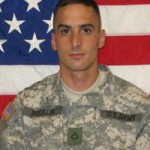 Spc. Brock Bucklin, 28, of Caledonia, Mich., who was assigned to the 1st Battalion, 68th Armor Regiment, 3rd Heavy Brigade Combat Team. In June, 2006, Bucklin, a mortar specialist, was fatally injured in an equipment accident while serving in Iraq. Brock Bucklin, 28, joined the Army in August 2004, about a year after his twin brother, Brad, did.